
Alabama Bloodborne Pathogens Certification & Body Art Requirements
State Training Acceptance & Compliance Overview – Alabama
Alabama does not maintain a centralized statewide licensing program or a single state-approved provider list for bloodborne pathogens (BBP) training specific to tattooing, body art, or permanent makeup.
Oversight of body art practices in Alabama is generally handled through local county health departments and public health authority rather than a single statewide licensing board. As a result, training requirements may vary by county or municipality.
OSHA-aligned bloodborne pathogens training is commonly used to meet local compliance expectations, studio policies, employer requirements, and event standards.
Who Regulates Tattooing and Body Art in Alabama?
Alabama Department of Public Health (ADPH)
The Alabama Department of Public Health (ADPH) provides statewide public health guidance and oversight related to sanitation, communicable disease prevention, and environmental health matters. While ADPH does not issue individual tattoo artist licenses statewide, it supports and coordinates with county health departments that regulate body art locally.
Official ADPH website:
https://www.alabamapublichealth.gov
Local county health departments are responsible for:
- Issuing body art permits
- Conducting inspections
- Establishing sanitation and infection-control requirements
- Verifying training documentation
Bloodborne Pathogens Training & Workplace Safety in Alabama
Although Alabama does not mandate BBP training for tattoo artists at the state level, OSHA workplace safety standards still apply whenever occupational exposure to blood or other potentially infectious materials (OPIM) exists.
OSHA-aligned BBP training is frequently used in Alabama to:
- Demonstrate infection-control knowledge
- Support studio safety and insurance policies
- Reduce liability and health risks
- Meet employer, studio, or event requirements
Many Alabama studios voluntarily require BBP certification as part of responsible business practices.
Alabama Counties That Require or Expect BBP Training
Several counties in Alabama do require or explicitly expect proof of bloodborne pathogens training as part of their body art permitting process. Examples include:
Baldwin County Health Department
Baldwin County requires body-art operators (tattooing, piercing, etc.) to present proof of a BBP course from a health-department-approved program when applying for a body art operator permit.
Website:
https://www.alabamapublichealth.gov/baldwin
Montgomery County Health Department
Montgomery County’s body art operator permit requirements include:
- Proof of BBP training
- Documentation of Hepatitis B vaccination or declination (when applicable)
Website:
https://www.alabamapublichealth.gov/montgomery
Jefferson County Department of Health
Jefferson County (including the Birmingham area) outlines a body art permitting process that requires a current bloodborne pathogens certificate from an approved source for body art practitioners and facilities.
Website:
https://www.jcdh.org
These county-level requirements confirm that BBP training is legally required in parts of Alabama, even though no statewide mandate exists.
Artists should always verify requirements with their local county health department.
Guest Artists, Events, and Studio Policies in Alabama
Tattoo conventions, guest artist placements, and private studios throughout Alabama frequently establish their own compliance standards. These often include:
- Proof of BBP or infection-control training
- Documentation of professional experience
- Adherence to sanitation and safety protocols
Maintaining OSHA-compliant BBP training helps artists meet these expectations, especially when working across county or state lines.
Age Restrictions and Consent Considerations
Age and consent rules for tattooing and body piercing in Alabama may vary by situation and enforcement authority. Body art professionals are expected to follow all applicable laws related to:
- Tattooing minors
- Body piercing consent
- Identification verification
- Recordkeeping
When questions arise, artists should consult local health authorities or legal counsel.
Why OSHA-Compliant BBP Training Still Matters in Alabama
Even in states with limited statewide regulation, OSHA-aligned BBP education remains important because it:
- Demonstrates professional responsibility
- Helps reduce infection risk to clients and artists
- Supports studio insurance and liability requirements
- Provides transferable documentation for interstate work
BBP training is widely viewed as a baseline safety credential within the body art industry.
What Alabama Body Art Professionals Should Do
Body art professionals working in Alabama are encouraged to:
- Confirm requirements with their local county health department
- Understand sanitation and public health expectations
- Maintain current OSHA-compliant bloodborne pathogens training
- Keep documentation readily available for inspections or studio policies
- Follow best practices for infection prevention and recordkeeping
Frequently Asked Questions
Is bloodborne pathogens training required for tattoo artists in Alabama?
Does Alabama accept OSHA-compliant BBP training?
Who regulates tattooing and body art in Alabama?
Is bloodborne pathogens training required for tattoo artists in Alabama?
Does Alabama accept OSHA-compliant BBP training?
Who regulates tattooing and body art in Alabama?
Available Bloodborne Pathogens Training Courses
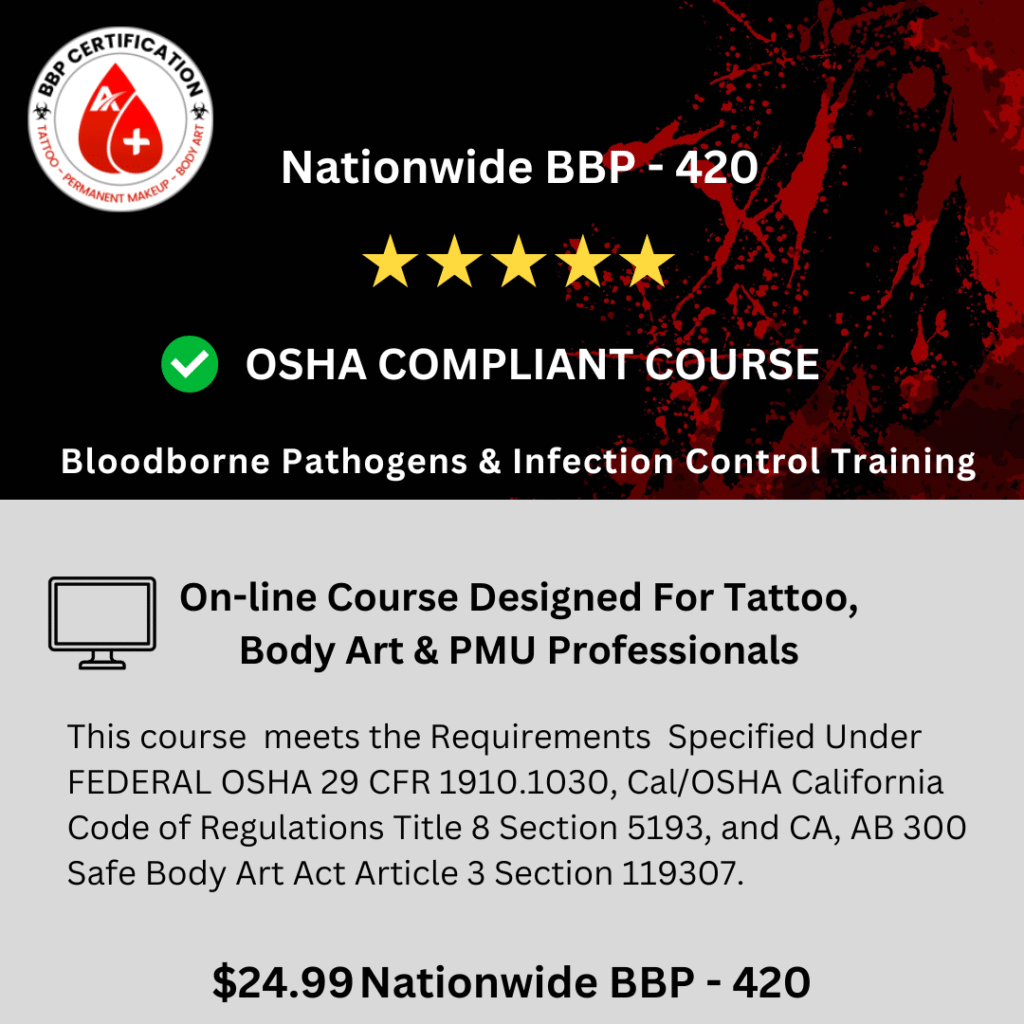
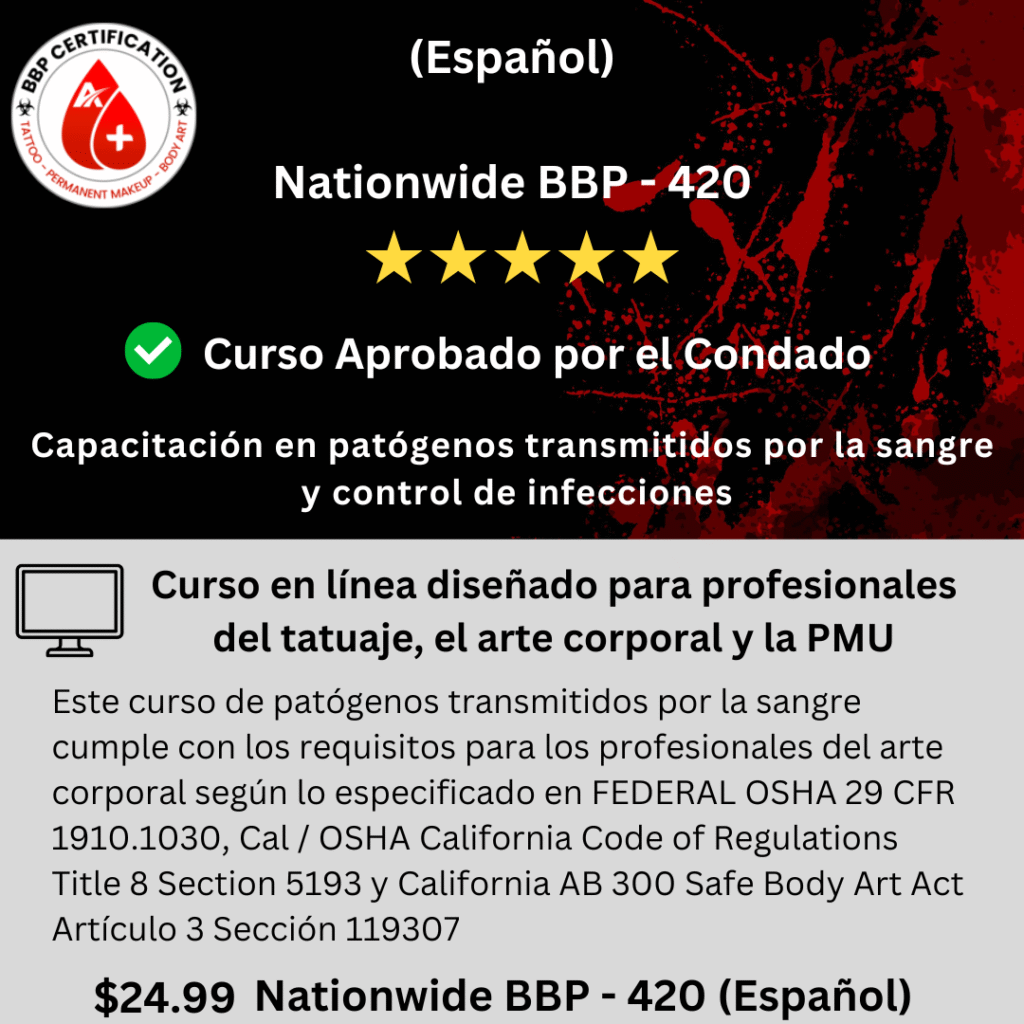
Get Certified Today!
If you are a tattoo artist, permanent makeup professional, body piercer, or body art practitioner working, maintaining current bloodborne pathogens education is a smart professional choice. An OSHA-compliant BBP course can help demonstrate infection-control knowledge, support studio policies, and provide peace of mind when working with clients or traveling for guest opportunities